Gold has always occupied a unique place in Indian portfolios. It is trusted, familiar, and emotionally reassuring. Yet when it comes to modern gold investment in India, many investors feel overwhelmed by choices, opinions, and half information. Physical gold, ETFs, bonds, digital formats, each claims to be the smartest option. The real question is not which option is popular, but which one actually fits your financial life.
This guide is written to help you think clearly, not emotionally. It brings together market facts, regulatory clarity, tax considerations, and portfolio logic so you can make informed decisions in 2026 and beyond. If you have ever wondered whether gold truly belongs in your portfolio, or how much of it should, you are in the right place.
Why Gold Still Matters in a Modern Portfolio

Gold continues to serve a distinct role that few other assets can replicate. It acts as a hedge during economic uncertainty, offers protection against inflation over long periods, and reduces overall portfolio volatility when combined with equity and debt. Research from global asset allocation studies consistently shows that portfolios with measured exposure to gold experience lower drawdowns during market stress.
However, gold works best when treated as a strategic allocation rather than a speculative bet. A thoughtful gold investment is about stability, not short term excitement.
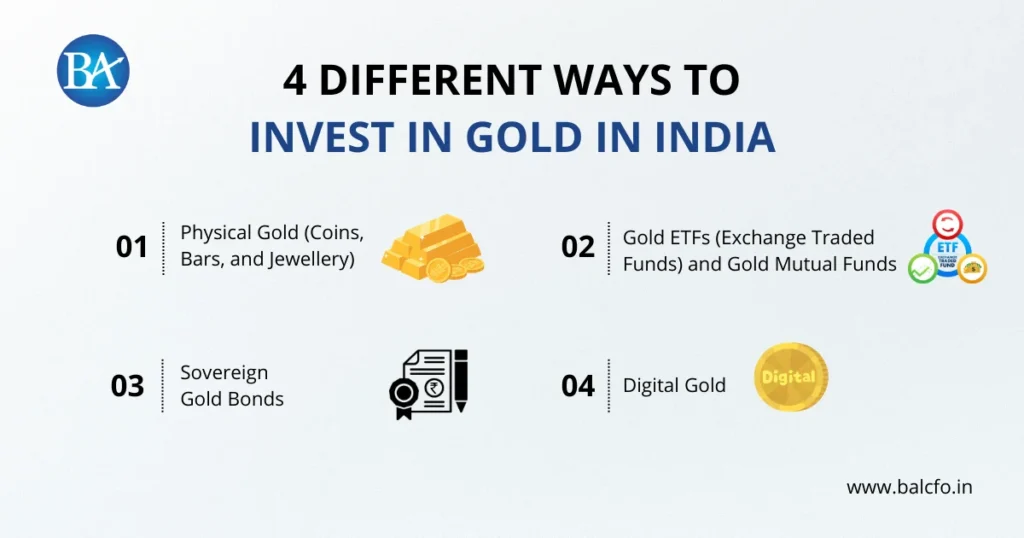
4 Different Ways to Invest in Gold in India
Before deciding the best way to proceed, it is important to understand what each option actually offers. Each format serves a different purpose and investor profile.
1. Physical Gold (Coins, Bars, and Jewellery)
Physical gold includes jewellery, coins, and bars. It offers emotional comfort and cultural value but comes with making charges, storage concerns, and resale deductions. From a portfolio perspective, it is the least efficient form of gold investment due to high friction costs.
2. Gold ETFs (Exchange Traded Funds) and Gold Mutual Funds
Gold ETFs (Exchange Traded Funds) track domestic gold prices and trade on stock exchanges. They are transparent, regulated, and liquid. If you are exploring how to invest in gold etf, you will need a demat account and basic market access. Gold mutual funds, which invest in ETFs, offer similar exposure without requiring demat accounts.
3. Sovereign Gold Bonds
Issued by the Government of India, these bonds provide gold price appreciation along with fixed interest. They are among the most tax efficient options for long term investors and a preferred form of gold investment for wealth preservation.
4. Digital Gold
Digital gold allows you to buy fractional gold online backed by stored physical gold. While convenient, it carries platform risk and lacks direct regulatory oversight. Anyone researching how to invest in digital gold should understand the custody structure clearly before committing funds.
Which Gold Option Fits Your Financial Situation
Most platforms explain products, very few help investors choose. This is where clarity matters.
If liquidity and transparency are priorities and you are exploring how to invest in gold etf, ETFs are a practical choice. If your horizon exceeds eight years and tax efficiency matters, sovereign bonds are hard to beat. Digital gold may suit convenience-led investors but only for limited exposure, while physical gold is best reserved for personal use rather than portfolio efficiency.
This framework helps investors move beyond asking what is the best way to invest in gold and start asking what is right for them.
Is Gold the Right Asset for You?
A common question investors ask is gold a good investment in today’s environment. The honest answer depends on expectations. Gold does not generate income like bonds or dividends like equities. Its strength lies in protection, not growth.
Gold works best when it forms a supporting pillar rather than the foundation of a portfolio. For most Indian investors, the best way to invest in gold is to allocate around 5 to 15%, which improves balance without sacrificing long-term growth potential.
Taxation and Cost Considerations for Gold Investments You Cannot Ignore
Tax treatment varies significantly across formats. Physical gold and ETFs attract capital gains tax based on holding period. Sovereign Gold Bonds offer tax exemption on maturity gains for individuals. Digital gold taxation mirrors physical gold.
Cost structures also differ. ETFs have expense ratios, physical gold has making charges, and digital gold has spreads. Ignoring these costs can quietly erode returns, making an otherwise sound gold investment inefficient.
3 Common Mistakes Investors Make With Gold
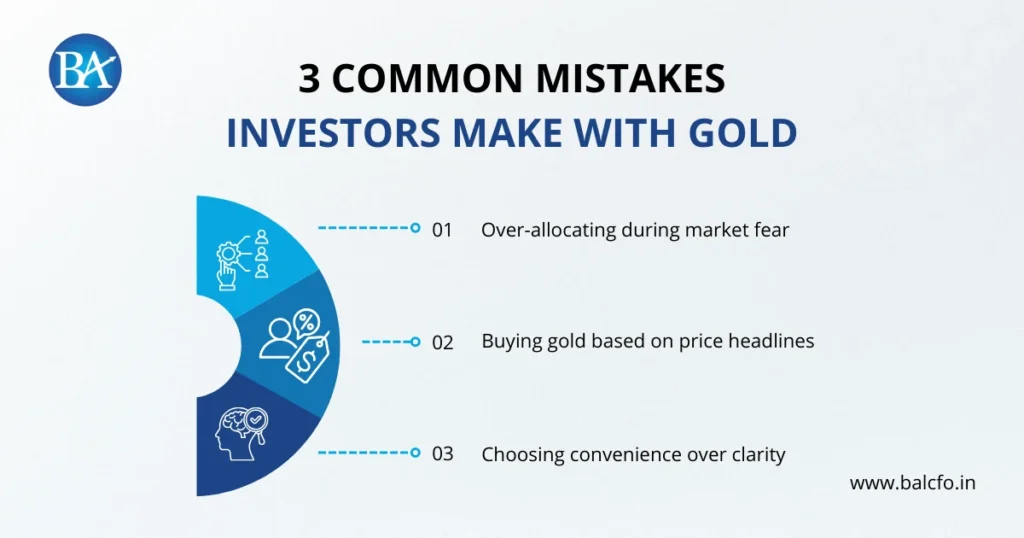
1. Over-allocating during market fear
Many investors increase gold exposure when markets feel uncertain and reduce it when conditions stabilize. This emotional pattern often leads to poor allocation decisions that do not align with long-term portfolio strategy.
2. Buying gold based on price headlines
Reacting to short-term price movements rather than overall portfolio needs can turn a stabilizing asset into a speculative bet. Gold works best as a strategic allocation, not a timing trade.
3. Choosing convenience over clarity
Investors sometimes prefer easy digital buying options without fully understanding costs, taxation, or custody structure. This can reduce transparency and make an otherwise sound gold investment less efficient.
A disciplined gold investment strategy avoids emotional timing and focuses on allocation discipline and periodic review.
How Gold Fits Into a Broader Wealth Strategy
At BellWether, portfolio construction begins with purpose. Gold is integrated as a risk management tool, not a return driver. Our experience advising Indian families and business owners shows that gold performs best when aligned with cash flow planning, tax strategy, and long term goals. When clients ask whether to Invest in Gold, the conversation always begins with what they are trying to protect, not what they hope to earn.
When Gold May Not Be the Right Choice
Gold may not suit investors seeking regular income or short term gains. It may also be unsuitable for portfolios already heavily skewed toward defensive assets. Asking is gold a good investment without context often leads to poor decisions. The right question is whether gold improves your portfolio’s resilience. If it does, it earns its place.
Gold Decisions That Support Long-Term Financial Stability
Selecting the right gold option is not about chasing trends or copying others. It is about aligning the asset with your financial reality. A well structured gold investment strengthens portfolios quietly and consistently.
Understanding product structure, tax impact, liquidity, and role within your asset mix allows gold to do what it does best: protect wealth when it matters most.
How BellWether Helps You Make Smarter Gold Investment Decisions

At BellWether, we help investors move beyond product selection and build portfolios that work in real life. If you are unsure how much gold to hold or which gold investment option fits your goals, our team can help you design a balanced, tax-efficient strategy aligned with your overall financial plan.
A structured review today can help you avoid overexposure, reduce risk, and bring clarity to your long-term decisions. Connect with BellWether and make confident, well-informed choices, not reactive ones.
FAQs About Gold Investment
1. How can I start investing in gold?
Start by choosing a regulated and simple option like gold ETFs or Sovereign Gold Bonds. Decide your goal first, diversification or long-term stability, and keep gold as a small part of your overall portfolio.
2. How to invest in gold for beginners with little money?
Beginners can start with gold ETFs, gold mutual funds, or digital gold, which allow small investments. Begin gradually and increase exposure only as your financial comfort grows.
3. What is the best time to buy gold?
There is no perfect time to buy gold. Investing regularly over time is usually better than trying to time price movements, as it reduces the impact of short-term volatility.
4. Does gold protect against inflation in the short term?
Gold is more effective as a long-term inflation hedge. Short-term price movements may not always match inflation trends closely.
5. Is gold a safe investment?
Yes, gold is considered a safe investment for long-term stability. It helps protect portfolios during market uncertainty but works best as a diversification tool, not a short-term return strategy.